
Table of Contents
- The Quick Verdict
- What Is a Disposable Camera?
- What Is a Polaroid Camera?
- Disposable Camera vs Polaroid: Head-to-Head
- Cost Breakdown in AUD
- Image Quality and Aesthetic
- Ease of Use at Events
- Best Occasions for Each Format
- Night Photography: How Each Format Performs
- Sustainability
- Which Should You Buy in Australia?
- Frequently Asked Questions
- Ready to Shoot?
Choosing between a disposable camera vs Polaroid comes down to one question: do you want prints your guests hold in their hands right now, or do you want the most shots for your money with results that arrive a few days later?
Both formats have a genuine place in 2026 Australian photography. Disposable cameras remain the cost-efficient crowd-pleaser for weddings, parties, and music festivals. Polaroid cameras produce physical instant prints that guests can pocket at the end of the night. Neither is universally better. Each excels in a different context.
This guide breaks down every meaningful difference so you can pick the right one.
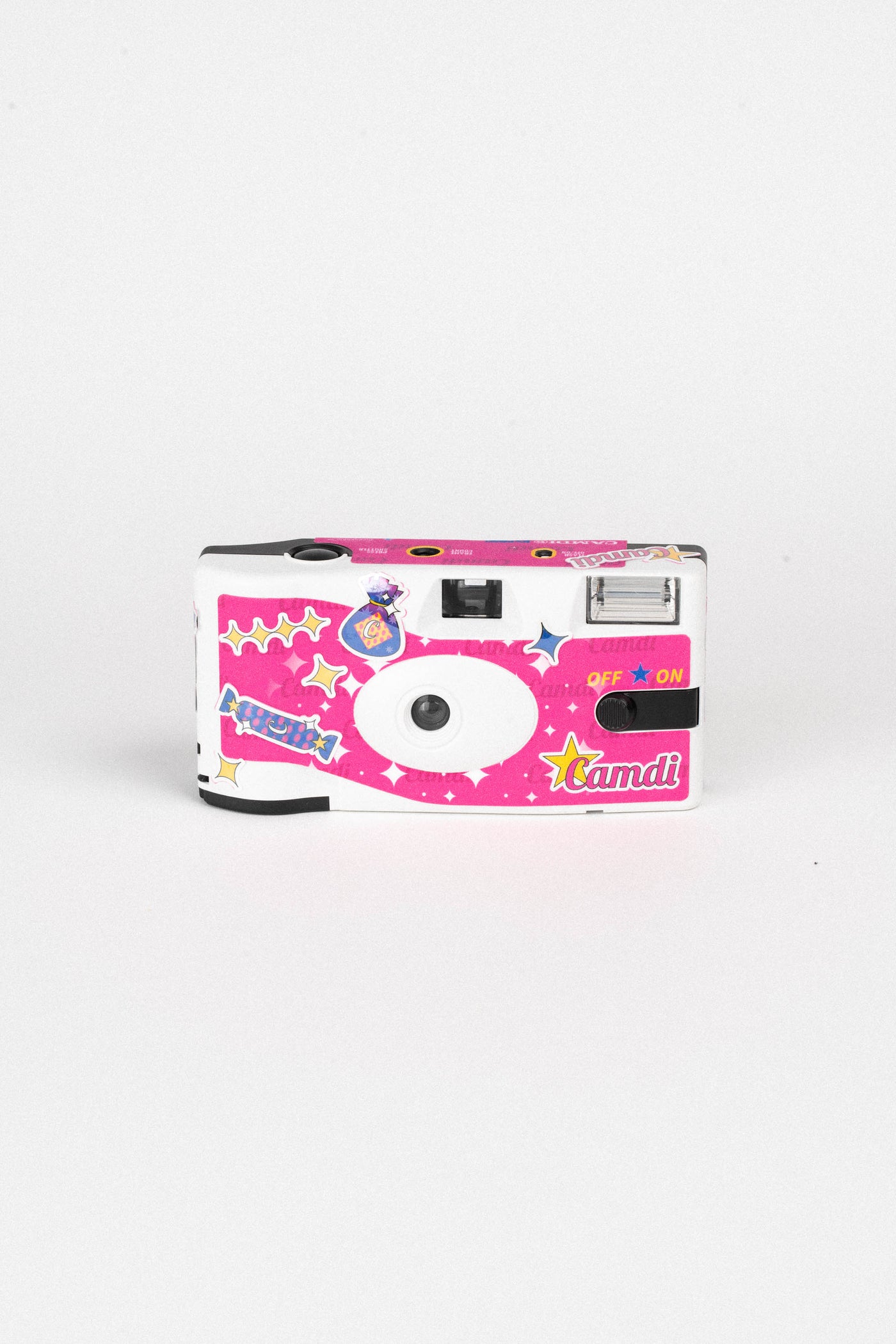 The CAMDI It's Pink disposable camera: pre-loaded, ready to shoot, and built for the hands of every guest at the table.
The Quick Verdict
Buy disposable cameras if: you want the most shots per dollar, you need cameras for multiple tables or guests, or you want natural candid film results without a high ongoing cost.
Buy a Polaroid if: you want guests to leave with a physical print in hand, the instant print is part of your event concept, or you specifically want that square, white-bordered instant aesthetic.
If you're weighing the costs carefully or buying more than two or three cameras for an event, disposable cameras almost always win on value.
What Is a Disposable Camera?
A disposable camera (also called a single-use camera) comes pre-loaded with 35mm colour-negative film, typically 27 exposures. The camera has a fixed aperture of f/10 (standard across most common Australian-market disposables), a shutter speed of around 1/100s, a fixed plastic lens, and a built-in flash. You shoot through the roll, advance with the thumb wheel, and hand the whole camera to a film lab.
The lab opens it, develops the film using the C-41 colour process, and returns digital scans. Standard turnaround at Australian labs is two to five business days.
Common Australian-market options include:
- Kodak Funsaver (ISO 800, 27 exposures, approx. $35–$45 AUD)
- Fujifilm Quicksnap Flash 400 (ISO 400, 27 exposures, approx. $32 AUD)
- Fujifilm Quicksnap Marine (waterproof, ideal for pools and surf, approx. $32 AUD)
- CAMDI It's Pink (ISO 800, 27 exposures, designed for Australian social events)
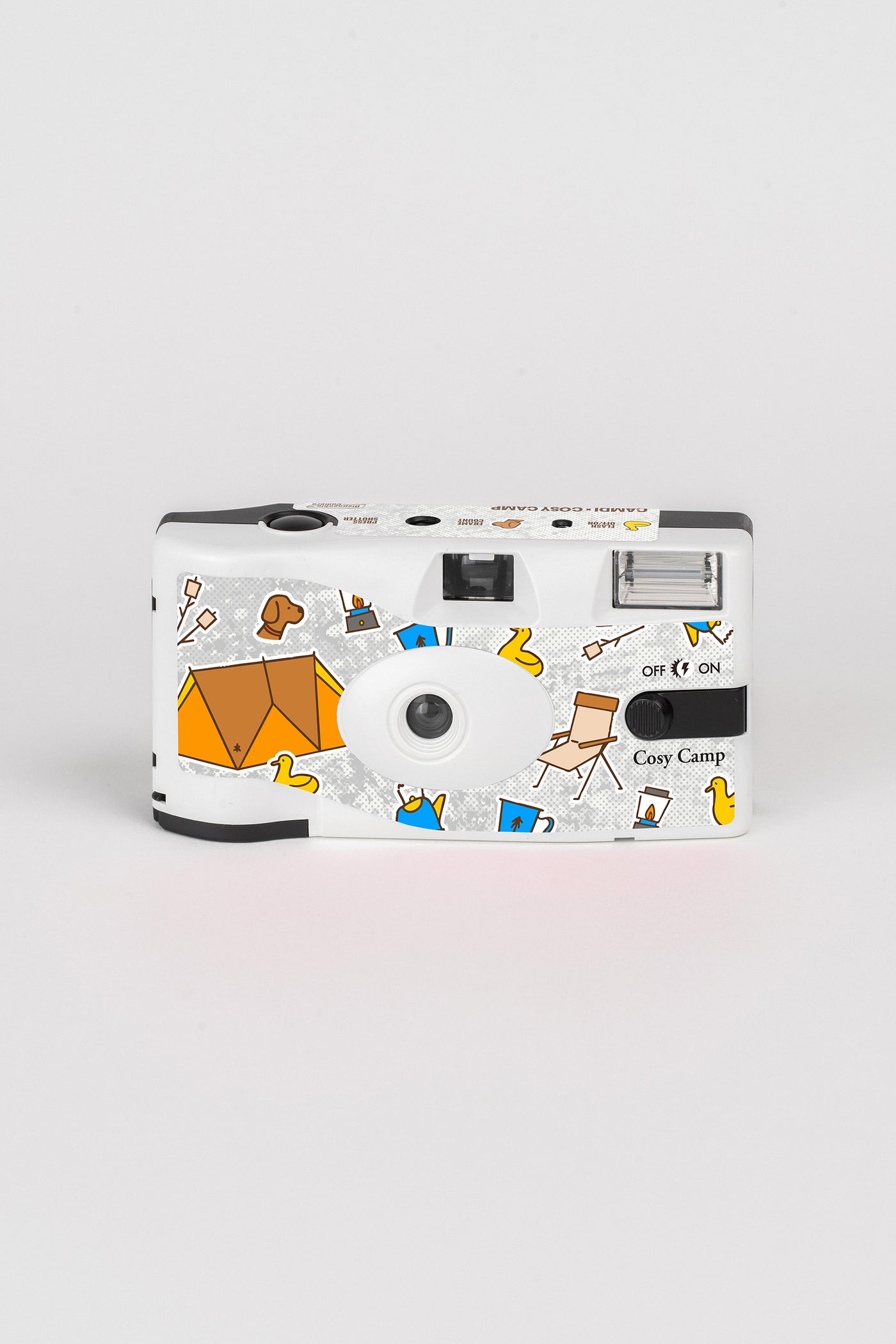
Browse the full CAMDI disposable camera collection for options designed specifically for the Australian market.
What Is a Polaroid Camera?
A Polaroid camera is an instant camera that ejects a self-developing print within seconds of pressing the shutter. The Polaroid Now and Now+ are the current flagship models. The Polaroid Go is a compact option with smaller prints. The original Polaroid 600 and SX-70 cameras from the 1970s and 1980s are still widely used with modern I-Type or 600 film.
Each Polaroid print measures roughly 79 x 79mm on the image area (classic square format) and develops in about 10 to 15 minutes, though the image begins appearing within seconds. The Polaroid Now (Gen 3) retails for approximately $229 AUD; the Polaroid Go for around $129 AUD. Film packs typically contain eight shots and cost $28 to $35 AUD per pack (prices as of 2026).
Fujifilm Instax cameras are often grouped with Polaroid in conversation, but they are a separate product line using different film. This article focuses specifically on the Polaroid vs disposable camera comparison. For a broader look at all three, see our guide to reusable vs disposable film cameras.
 A Fujifilm Instax Mini. Instax uses its own instant film, unlike a 35mm disposable. Photo: "Instax Instant Camera" by Mike Mozart, CC BY 2.0.
Disposable Camera vs Polaroid: Head-to-Head
| Feature | Disposable Camera | Polaroid Camera |
|---|---|---|
| Upfront cost (AUD) | $27–$32 | $129–$229 |
| Cost per shot | ~$1.89 (all-in) | ~$3.50–$4.38 (film only) |
| Exposures per purchase | 27 (typical) | 8 per film pack |
| When you see photos | 2–5 days after lab development | 10–15 minutes |
| Print format | Digital scan + optional prints | Physical instant print |
| Image quality | Soft, grainy film aesthetic | Lower resolution, integral film look |
| Night/indoor performance | Decent with built-in flash | Struggle without additional lighting |
| Ease of use | Extremely simple | Simple; film loading required |
| Creative control | None | Minimal (some models have exposure control) |
| Best for | Events, gifts, maximum shots per dollar | Instant keepsakes, guestbooks, gifting prints |
| Sustainability | Higher per-roll waste vs reusable | Plastic film packs + integral chemistry per shot |
Cost Breakdown in AUD
Disposable camera: total cost
A Kodak Funsaver or CAMDI disposable runs around $27 to $32 AUD. Add developing and scanning.
At Australian labs, C-41 colour develop plus a standard digital scan costs approximately $19 to $25 AUD. Most Australian labs like Hillvale (Melbourne) and Do Film! Lab (Sydney) accept mail-in from anywhere in the country.
- Camera: ~$32
- Develop + scan: ~$19
- Total for 27 shots: ~$51 AUD
- Cost per shot: ~$1.89
Polaroid camera: total cost
The Polaroid Now (Gen 3) body costs approximately $229 AUD. A pack of eight I-Type shots (Polaroid Color i-Type Film) runs around $28 to $35 AUD per pack.
 A Polaroid ejects a self-developing print within seconds. Photo: "Polaroid Instant Camera model 420" by JeepersMedia, CC BY 2.0.
- Camera body: ~$229 (one-time)
- Per pack of 8 shots: ~$32
- Cost per shot (film only): ~$3.50–$4.38, depending on retailer
- Cost per shot including camera amortised over 100 shots: ~$5.79
Even with the camera cost amortised over many uses, the per-shot cost of Polaroid remains roughly triple that of a disposable camera.
The practical event cost: Placing 10 disposable cameras on wedding tables (10 x ($32 camera + $19 developing) = $510 total for ~270 shots) compared to 10 Polaroid cameras ($229 each x 10 = $2,290 body cost alone, before a single frame of film) illustrates the scale of the difference.
If you're buying cameras for a film camera gift in Australia or a group event, the disposable camera is the more practical choice by a significant margin.
Image Quality and Aesthetic
Both formats produce a distinctly analogue aesthetic that sets them apart from digital photography. The look, however, is quite different.
Disposable cameras produce 35mm colour-negative film images with natural grain, warm colour rendering, and that characteristic edge softness from a plastic lens. The results sit closest to what people mean when they say "film photos." Detail is reasonable in good light, though high-ISO 800 film produces visible grain that adds texture. Scanned results can be shared digitally immediately.
Polaroid cameras use integral instant film, a completely different technology. The image forms within the print itself through a multi-layer chemical process. Colours tend to be slightly desaturated or warm depending on the film type. Resolution is lower than 35mm by a meaningful margin. Highlights can blow out easily and shadow detail can be muddy, particularly indoors or at night.
The Polaroid aesthetic is unmistakable and widely loved precisely for its imperfections. But for pure image quality or for situations where you need to capture people clearly in mixed light, 35mm disposable cameras produce more reliable results.
 The 35mm disposable camera aesthetic: natural grain, warm tones, and the candid spontaneity that makes film photography compelling.
Ease of Use at Events
For weddings, birthdays, hen's parties, or any event where cameras are placed on tables and picked up by guests with varying levels of camera experience, simplicity matters enormously.
Disposable cameras are as simple as a camera gets. There is a shutter button, a flash switch, and a thumb wheel to advance the film. A guest who has never used a film camera in their life can operate one successfully within 30 seconds. No film loading, no settings to adjust, no batteries to worry about (the flash capacitor charges from the disposable's built-in battery).
Polaroid cameras are not complicated, but they do involve slightly more: pointing the camera away from the print slot so guests don't expose the developing image to light, understanding that the print needs to be kept face-down or in a pocket while it develops, and keeping film packs away from heat (instant film degrades quickly above 30°C, relevant for outdoor Australian summer events).
For large events with many guests, the "point and click and nothing else" simplicity of a disposable is genuinely valuable.
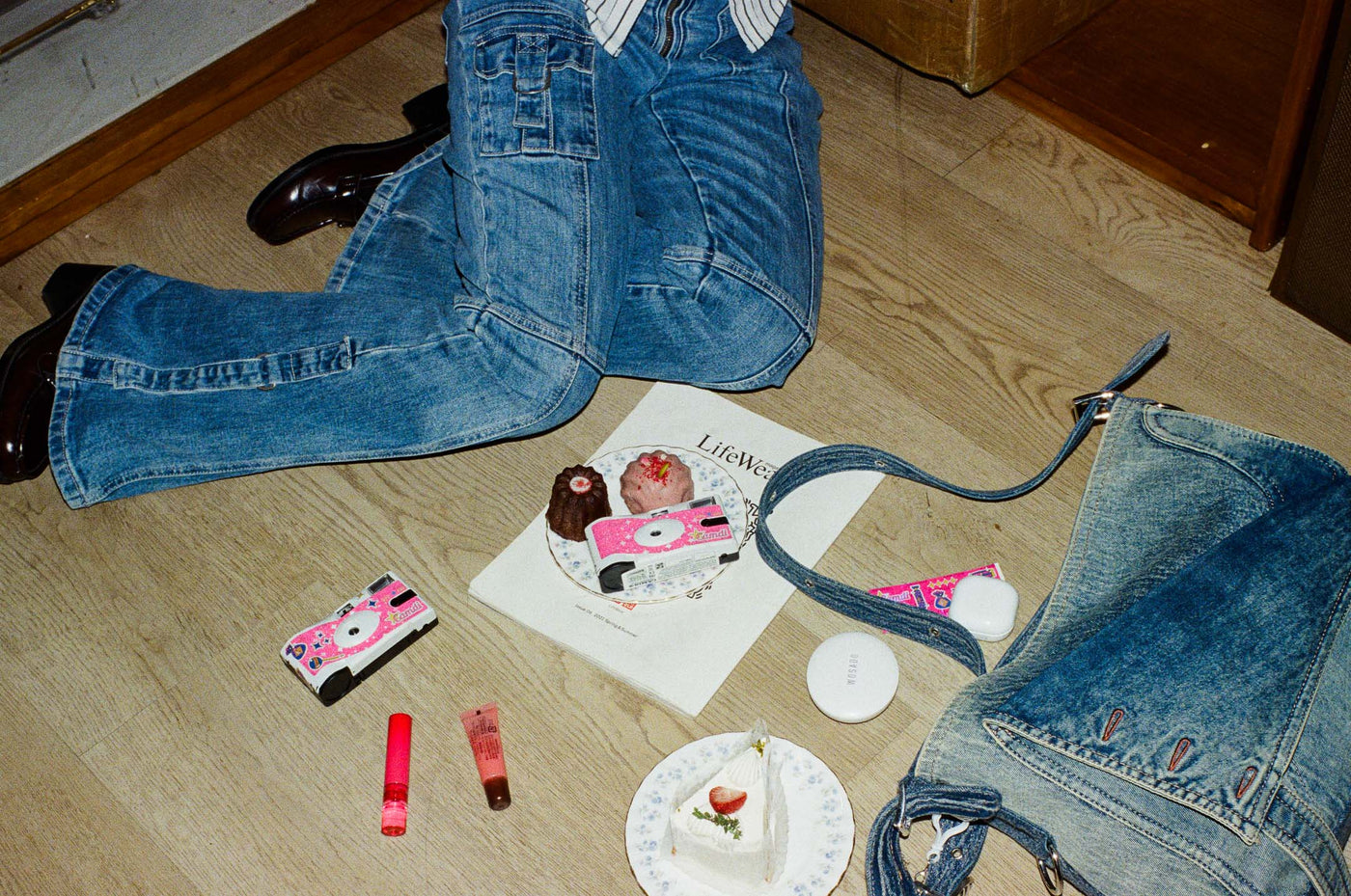 Disposable cameras require no instruction at events. Guests pick them up and shoot.
Best Occasions for Each Format
Disposable cameras excel at:
Weddings and receptions. One camera per two tables, collected at the end of the night, returns hundreds of unposed moments no wedding photographer could capture. The turnaround is two to five days to get digital scans back.
Music festivals and outdoor events. A $32 camera you can afford to lose, drop, or get rained on is the right call. No one brings a $229 camera to a mosh pit.
Hen's nights, bucks parties, and birthdays. The casual film aesthetic suits the night perfectly, and the photos arrive together as a batch rather than scattered across multiple guests' phones.
Beach and water. The Fujifilm Quicksnap Marine is waterproof and built for surf and pool photography. No Polaroid model competes in water environments.
Bulk gifting. For any event where cameras are a gift or party favour, disposables make financial sense at scale.
Polaroid cameras excel at:
Weddings where instant prints are part of the concept. Some couples set up a Polaroid guestbook station where guests take a print, write a message, and stick it into a book. This is a specific and lovely use case where Polaroid clearly wins.
Portrait moments. A Polaroid print as a keepsake from a portrait session, styled shoot, or performance has genuine charm. The physical object is the point.
Smaller, more intimate events. A dinner party of 12 where you want to capture moments and hand out prints is a great Polaroid use case. Scaling it to 100 wedding guests becomes expensive very quickly.
Props and styling. Holding a Polaroid camera or print is a recognisable visual aesthetic that works well for creative shoots, brand activations, and social content.
Night Photography: How Each Format Performs
Low-light and indoor photography is one of the most revealing tests for both formats.
Disposable cameras loaded with ISO 800 film (most common) perform reasonably at indoor events with their built-in flash. The flash range is typically 1 to 4 metres, enough to light a face across a table. Beyond that range, backgrounds fall off to black. Flash recycling takes roughly two to three seconds between shots.
35mm film at ISO 800 handles low-light indoor scenes with natural flash falloff and characteristic grain.
Polaroid cameras struggle more in low light. The integral film has a rated ISO of around 640 (I-Type film), but the camera's lens and shutter are not optimised for night or indoor conditions without supplement flash. Many users find that Polaroid Now shots taken indoors at a dimly lit venue produce washed-out, blurry, or underexposed results unless the room is well-lit.
For evening events, disposable cameras generally deliver more consistent results.
Sustainability
Neither format is environmentally ideal, but the differences are worth knowing.
A disposable camera produces a full camera body as waste per 27 shots. Most Australian labs recycle the plastic shell, and silver is recovered from the developed chemistry. The Hillvale re~di disposable (approx. $27 AUD, 24 exposures) is made from collected used camera bodies, a more circular option.
Polaroid cameras produce one small film pack cartridge per 8 shots, plus integral film chemistry sealed within each print. The prints themselves are not recyclable through standard streams due to the multi-layer chemical composition. Over time, a Polaroid camera generates less camera-body waste than disposables but consistent chemical-pack waste per shot.
If sustainability matters, a reusable 35mm film camera is the best long-term choice. Our reusable vs disposable film cameras guide covers this in detail.
Which Should You Buy in Australia?
Use this quick decision framework:
Choose disposable cameras if:
- You need more than 3 cameras for an event
- Budget per shot matters
- Guests range widely in camera experience
- You want candid, natural 35mm film results
- You're shooting outdoors, at a festival, or near water
Choose a Polaroid camera if:
- You specifically want guests to leave with a physical print
- You're setting up a guestbook station at a wedding or styled shoot
- The instant-print aesthetic is central to your event concept
- You're buying for a creative use rather than mass event coverage
Buy both if:
- You have budget for both: a Polaroid station for portrait moments plus disposable cameras on guest tables is a popular combination at weddings and works extremely well.
For the disposable side of that equation, the CAMDI It's Pink is designed for exactly these social events, with a camera that looks good on any table and handles itself well under mixed event lighting.
Frequently Asked Questions
Is a disposable camera or Polaroid better for a wedding?
For most weddings, disposable cameras give you more shots per dollar and produce more candid results from guests. A Polaroid camera is better suited to a specific guestbook or portrait station setup where instant prints are the point. Many couples use both: disposables on tables and a Polaroid station near the photobooth or entrance.
How much does Polaroid film cost in Australia in 2026?
A pack of 8 Polaroid I-Type or 600 colour film shots costs approximately $28 to $35 AUD at major retailers including Officeworks, JB Hi-Fi, Camera House, and online. That works out to roughly $3.50 to $4.38 per shot before any camera cost. Black and white I-Type film is available at a similar price point.
Are disposable cameras cheaper than Polaroid?
Yes, significantly. An all-in disposable camera cost (camera plus develop and scan) is approximately $1.89 per shot. Polaroid film alone costs $3.50 to $4.38 per shot, not counting the $129 to $229 camera body. For events where you need multiple cameras or many shots, disposables are the more cost-effective format.
Can you get Polaroid film developed at a film lab?
No. Polaroid integral film develops inside the print itself through a self-contained chemical process. There is nothing to develop at a lab. If the print comes out incorrectly exposed or damaged, it cannot be salvaged. Disposable cameras, by contrast, use standard C-41 film that any Australian film lab can process.
What is the best disposable camera in Australia for parties and events?
The Kodak Funsaver (ISO 800, 27 exposures, approx. $35–$45 AUD) and Fujifilm Quicksnap Flash 400 are the most widely available options. The CAMDI It's Pink is a designed disposable built specifically for Australian social events, available with bulk order options and CAMDI's develop-and-scan service. Browse the CAMDI disposable collection for the current range.
Do Polaroid photos last as long as film photos?
Polaroid prints are less archivally stable than processed 35mm film negatives. Integral film prints can fade, yellow, or shift colour over decades, particularly if stored in heat, humidity, or direct sunlight. 35mm colour-negative film, stored correctly, retains good colour and detail for 50 or more years. For archival purposes, scanned 35mm film is the more durable format.
Ready to Shoot?
The disposable camera vs Polaroid debate comes down to what you need the camera to do. For events where coverage, value, and natural 35mm results matter, disposable cameras are the right tool. For occasions where the instant physical print is the experience, Polaroid delivers something different and worthwhile.
If you're leaning toward disposable cameras for an upcoming event or simply want a well-designed camera that produces results worth keeping, the CAMDI It's Pink is a strong starting point. Or browse the full CAMDI disposable collection to see what suits your shoot.
For gift ideas and event camera planning, our film camera gifts guide for Australia has practical suggestions across all budgets. And if you're still weighing up whether to commit to film at all, the reusable vs disposable camera guide covers that ground in full.
Sources:
- Polaroid Now product information and film pricing: https://www.polaroid.com
- Kodak Funsaver product information: https://www.kodak.com
- Fujifilm Quicksnap product information: https://www.fujifilm.com/au
- Hillvale film lab pricing: https://hillvale.com.au
- Internal CAMDI product and pricing references: thecamdi.com.au


