
Table of Contents
- What are the main 35mm film types?
- Colour negative film
- Black & white film
- Slide film (reversal film)
- Understanding ISO: which speed suits your shoot?
- 35mm film types at a glance: comparison table
- How to choose the right film for your situation
- CAMDI colour negative film: what makes it different
- Where to buy 35mm film in Australia
- Frequently Asked Questions
- Ready to load your camera?
Choosing the right 35mm film type is one of the most satisfying decisions in film photography, and one of the most confusing for newcomers. The three main 35mm film types are colour negative, black & white negative, and slide (reversal) film. Each produces a different look, tolerates exposure differently, and suits different kinds of shooting.
This guide explains exactly what each type does, which ISO to reach for in different conditions, and how to match your film to the camera you're loading. Whether you're starting out with a reusable 35mm point-and-shoot or loading a manual SLR for a weekend shoot, the right film makes a visible difference.
What Are the Main 35mm Film Types?
All 35mm film is coated with silver halide crystals suspended in a gelatin layer called an emulsion. Light hits the emulsion and triggers a chemical reaction, forming a latent image that becomes visible during development. The key difference between film types is how that image forms and what it looks like after processing.
Colour negative film forms a negative image in which colours are inverted: highlights appear dark, shadows appear light, and hues are shifted to their complements. During printing or scanning, the lab inverts the image back to natural colours. This type is processed using C-41 chemistry, which is available at virtually every film lab in Australia.
Black & white negative film works on the same negative principle but records only luminance, with no colour information stored. The result is a greyscale image with grain, contrast, and tonal depth that many photographers find more expressive than colour.
Slide film (reversal film) produces a positive image directly: what you see on the processed film strip is the actual photograph, with correct colours and brightness. This is the format used for projection slides. It is processed using E-6 chemistry, which fewer labs offer in Australia compared to C-41.
Each type rewards different intentions. Knowing the difference before you buy means you spend less time guessing and more time shooting.
Colour Negative Film
Colour negative film is the right starting point for nearly every film photographer. It is the most forgiving of the three types, handling overexposure particularly well: you can overexpose colour negative by two to three stops and still pull detail in the highlights during scanning. It is available in a wide ISO range, widely stocked, and compatible with the C-41 development process that every Australian film lab offers.
What colour negative film looks like
Colour negative film produces warm, saturated results with a characteristic film grain that varies by ISO. Lower-ISO stocks (ISO 100–200) produce finer grain and richer saturation, making them ideal for outdoor daylight shots. Higher-ISO stocks (ISO 400–800) produce more visible grain, which reads as texture in bright conditions and softens shadow detail in low light. The grain is part of the appeal.
Colour palette varies significantly between manufacturers. Kodak films tend toward warm, golden tones. Fujifilm stocks historically lean cooler and greener, with precise skin tones. CineStill and CAMDI's own stocks take distinct cinematic approaches (more on that below).
Colour negative film at ISO 250 in daylight: warm tones, moderate grain, and generous detail in both highlights and shadows.
Common colour negative film stocks available in Australia
| Film | ISO | Character | Best for |
|---|---|---|---|
| Kodak Ultramax 400 | 400 | Warm, punchy, forgiving | General-purpose outdoor and indoor |
| Kodak Portra 400 | 400 | Fine grain, neutral-warm, silky skin tones | Portraits, travel, important rolls |
| Kodak Portra 800 | 800 | Fine grain for ISO 800, rich shadows | Low-light, indoor, gig photography |
| Kodak ColorPlus 200 | 200 | Budget, warm, slightly soft | Everyday daylight shooting |
| Fujifilm 400 | 400 | Warm, slightly punchy, versatile | Everyday daylight, all-round shooting |
| CineStill 800T | 800 | Tungsten-balanced, halation on highlights | Night photography, artificial light |
| CineStill 50D | 50 | Very fine grain, vivid daylight | Bright outdoor, studio work |
| CAMDI Lost in Tokyo 500 | 500 | Cinematic grain, lifted shadows, warm midtones | Street, travel, mixed light |
| CAMDI Before Sunset | 250 | Golden hour palette, soft contrast | Portraits, lifestyle, warm-light scenes |
For an Australian-specific overview of where to buy and what each stock costs in AUD, see the film photography for beginners guide.
Black & White Film
Black & white film strips away colour and forces a different kind of seeing. Without hue, the photograph depends entirely on light, shadow, texture, and form. This is why black & white film has remained central to documentary photography, portraiture, and fine art long after colour became standard.
What black & white film looks like
The defining quality of black & white film is grain. At ISO 400, films like Kodak Tri-X 400 and Ilford HP5 Plus produce a pronounced, visible grain structure that adds energy to street photography and portraiture. At lower ISOs (Ilford Delta 100, Kodak T-Max 100) the grain is finer and the tonal gradations smoother, closer to a silver-gelatin print aesthetic.
Contrast also varies by film. Some black & white stocks are high-contrast by design, deepening shadows and brightening highlights for dramatic results. Others are flatter by default, preserving tonal range across the whole frame for printing flexibility.
Black and white film at night: grain becomes texture, and contrast creates structure where colour would distract.
Can you develop black & white film at Australian labs?
Yes, though with less universal availability than C-41. Many Australian labs process black & white using standard D-76 or ID-11 chemistry, or dedicated developers like Rodinal. Notable examples include Hillvale in Melbourne and Do Film! Lab in Sydney. A handful of labs only process C-41, so confirm before you drop off.
Some photographers also develop black & white film at home, since the chemistry is simpler, cheaper, and less temperature-sensitive than C-41. It is a rewarding next step once you have a few rolls under your belt.
Common black & white film stocks available in Australia
| Film | ISO | Character | Best for |
|---|---|---|---|
| Ilford HP5 Plus | 400 | Versatile, forgiving, classic grain | Street, documentary, everyday |
| Kodak Tri-X 400 | 400 | High contrast, bold grain, punchy | Photojournalism, portraiture |
| Ilford Delta 100 | 100 | Ultra-fine grain, smooth tones | Studio, controlled light, fine art |
| Kodak T-Max 100 | 100 | Tabular grain, very sharp | Landscape, architecture |
| Ilford Pan F Plus 50 | 50 | Extremely fine grain, high resolution | Bright outdoor, enlargements |
| Lomography Lady Grey 400 | 400 | Medium grain, accessible price | General shooting, beginners |
Slide Film (Reversal Film)
Slide film (also called reversal film or transparency film) produces a positive image directly on the processed strip. Hold a developed slide up to the light and you see the photograph exactly as it was captured: correct orientation, correct colours, correct brightness. No printing inversion required.
The results, when correctly exposed, are remarkable. Slide film produces the highest colour saturation and sharpness of any 35mm film type. Shadow areas are deep and rich; highlights glow. The Fujifilm Velvia series is the benchmark for this quality, with a colour palette so vivid it almost looks oversaturated until you see it projected.
CineStill 500T, a tungsten-balanced colour negative film with slide-like contrast characteristics, shot in daylight: note the lifted shadows and rich, cinematic midtones.
The trade-off: exposure latitude
Slide film's biggest limitation is narrow exposure latitude. Where colour negative film forgives two to three stops of over- or underexposure, slide film tolerates roughly half a stop either way before detail is lost. You need accurate metering, or a willingness to bracket exposures.
For beginners, this is a real constraint. Most photographers pick up slide film after building confidence with colour negative, once they have a feel for metering in different conditions.
E-6 processing in Australia
Slide film requires E-6 processing, which is available at fewer labs than C-41. In Australia, labs offering E-6 include Hillvale (Melbourne, mail-in accepted nationally), Irohas Photo (Haymarket, Sydney), Do Film! Lab (Darlinghurst, Sydney), and a small number of specialist labs in other capital cities. Confirm availability before you commit to a roll, particularly if you are outside a capital city.
Common slide film stocks available in Australia
| Film | ISO | Character | Best for |
|---|---|---|---|
| Fujifilm Velvia 50 | 50 | Ultra-vivid, high contrast, fine grain | Landscape, nature, subjects with bold colour |
| Fujifilm Velvia 100 | 100 | Vivid, slightly more flexible | Landscape, wider shooting conditions |
| Fujifilm Provia 100F | 100 | Accurate colour, moderate saturation | Portraits, general use, nature |
| Kodak Ektachrome E100 | 100 | Neutral, fine grain, vivid | Travel, portrait, studio |
Understanding ISO: Which Speed Suits Your Shoot?
ISO (International Organization for Standardization) is the number on every film box. It describes the film's sensitivity to light. Higher ISO = more sensitive = works in darker conditions, but also more grain. Lower ISO = less sensitive = needs more light, but produces finer grain and richer colour.
This is the single most practical decision you make when choosing a film stock. Get the ISO right and the rest of the process is straightforward.
ISO guide for common Australian shooting situations
| Situation | Recommended ISO | Why |
|---|---|---|
| Bright outdoor daylight (beach, park, festival) | 100–200 | Plenty of light; low ISO captures fine grain and rich colour |
| Overcast outdoor (cloudy day, shaded street) | 400 | Balanced light sensitivity without overexposing in bright patches |
| Indoor with natural light (café, home, studio near a window) | 400–500 | Moderate sensitivity handles mixed indoor and window light |
| Evening, golden hour, dusk | 400–800 | Reduced ambient light needs more sensitive film |
| Night, artificial light, gigs, dark venues | 800+ | High sensitivity needed; grain becomes part of the aesthetic |
| Mixed conditions (travel, street, shooting all day) | 400 | The best all-rounder across changing light |
ISO 400 is the practical default for most Australian shooters. It handles sun, cloud, and indoor light well enough that a single roll works across a full day out. For a dedicated beach or Byron Bay summer roll, ISO 200 or lower is worth the upgrade.
35mm Film Types at a Glance: Comparison Table
| Feature | Colour Negative | Black & White Negative | Slide (Reversal) |
|---|---|---|---|
| Image type | Negative (inverted) | Negative (inverted) | Positive (direct) |
| Processing chemistry | C-41 | Varies (D-76, Rodinal, etc.) | E-6 |
| Lab availability in Australia | Virtually universal | Common (not all labs) | Specialist only |
| Exposure latitude | Generous (2–3 stops) | Moderate (1–2 stops) | Narrow (±0.5 stop) |
| Grain | Moderate, ISO-dependent | Pronounced, expressive | Very fine |
| Colour saturation | Natural to warm | N/A (greyscale) | Very high |
| Difficulty level | Beginner-friendly | Beginner to intermediate | Intermediate to advanced |
| Price (AUD, approx.) | $15–$28 per roll | $14–$22 per roll | $20–$36 per roll |
| Best for | Everyday shooting, beginners | Portraiture, street, fine art | Landscape, projection, advanced |
How to Choose the Right Film for Your Situation
The right 35mm film type comes down to three questions: what are you photographing, what light will you be in, and how much tolerance do you have for exposure error?
Starting out? Load a colour negative film at ISO 400. Kodak Ultramax 400 and CAMDI Lost in Tokyo 500 are both excellent starting points. They are forgiving, widely developed, and produce results that look distinctly like film without requiring precise metering.
Shooting portraits or people? Colour negative at ISO 400 with warm characteristics (Kodak Portra 400, CAMDI Before Sunset) is the go-to. The warm palette flatters skin tones. The latitude means a shot taken a stop underexposed during a golden-hour portrait session is recoverable.
Shooting at night or indoors? ISO 800 colour negative (Kodak Portra 800, CineStill 800T) handles low light while keeping the image usable. CAMDI Lost in Tokyo 500 performs well in mixed urban light (streetlights, neon, and ambient city glow) because its 500 ISO sits between the standard 400 and 800 speeds.
After a moody, timeless look? Load Ilford HP5 Plus or Kodak Tri-X 400 in black & white. The grain adds intention; the lack of colour forces composition to do the work.
Ready for a challenge? Try a roll of Fujifilm Velvia 50 or Kodak Ektachrome E100. Bracket your exposures (shoot at box speed, half a stop over, half a stop under) and find a lab that offers E-6. The results are worth it.
See also: Reusable vs Disposable Film Cameras. If you are still deciding what camera to load your film into, this guide covers the full comparison.
CAMDI Colour Negative Film: What Makes It Different
CAMDI's film range sits within the colour negative category but is designed with a specific aesthetic. Both current stocks are 35mm, 36 exposure, and processed with standard C-41 chemistry, meaning any Australian lab can handle them.
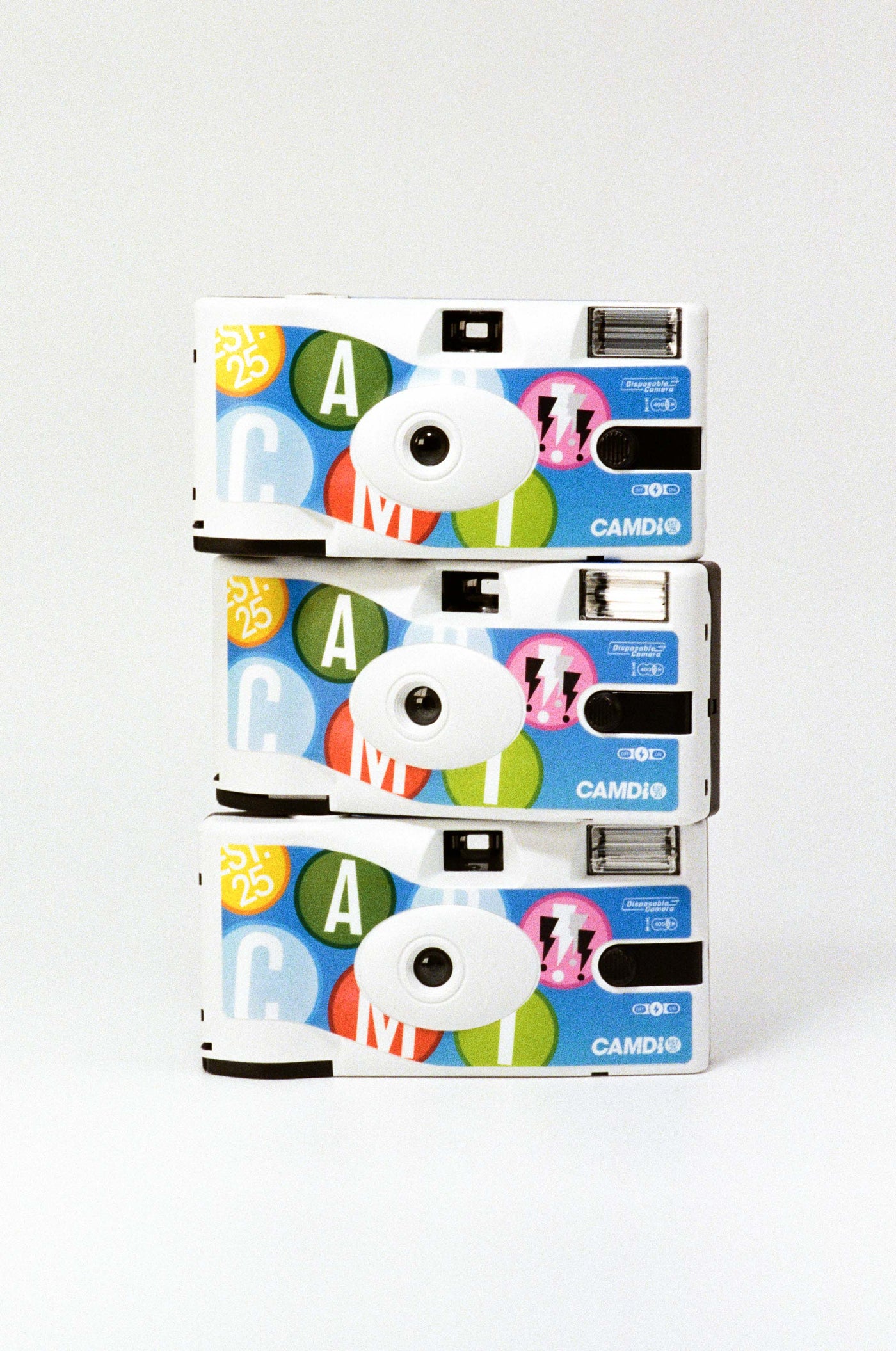 CAMDI colour negative film: 35mm, 36 exposures, C-41 compatible, designed for Australian shooting conditions.
CAMDI Lost in Tokyo 500 is the low-light and travel stock. At ISO 500, it sits in a useful middle range: more sensitive than standard 400 stocks, less grainy than 800. The emulsion produces lifted shadows (shadow detail is retained rather than crushed to black), warm midtones, and a cinematic grain structure. It performs well in urban environments, mixed artificial light, and overcast outdoor conditions.
CAMDI Before Sunset is tuned for warm-light conditions. The palette leans into golden hour, warm interiors, and scenes lit by soft, directional light. It suits portraits, lifestyle shooting, and any moment where the warmth of the light is the point. The contrast is deliberately softer than Lost in Tokyo 500, which preserves skin texture and keeps highlights from blowing out in late-afternoon sun.
Both stocks are available individually or as part of the CAMDI colour negative film collection.
For shooters who prefer a disposable camera that handles all conditions rather than specialising, Camdicolor is the everyday single-use option, designed for Australian light across a full range of shooting situations.
Where to Buy 35mm Film in Australia
Film availability in Australia has improved significantly over the past few years. Here are the main purchasing options in 2026.
Online retailers (national shipping)
- CAMDI (thecamdi.com.au): own-brand colour negative film, Australian-designed, ships nationally
- Hillvale (hillvale.com.au): broad range including Kodak, Fujifilm, Ilford, Lomography, and expired stock
- Irohas Photo (irohasphoto.com.au): film, cameras, and developing; reliable for AU-stocked Kodak and Fujifilm
- Camera Electronic (cameraelectronic.com.au): Perth-based but ships nationally; broad stock
In-store (major cities)
- Camera House locations (Brisbane, Sydney, Melbourne, Adelaide): Kodak, Fujifilm, Ilford
- Ted's Cameras: Kodak and Fujifilm in most stores; stock varies by location
- Hillvale (Brunswick, Melbourne): film, cameras, and on-site developing; one of the most comprehensive in-store film ranges in Melbourne
- Ikigai Film Lab (Melbourne): film, developing, and scanning services
Pricing guide (approximate AUD, 36 exposures, 2026)
- Budget stocks (Kodak ColorPlus, Fujifilm C200): $15–$18 per roll
- Mid-range (Kodak Ultramax, Fujifilm 400): $18–$22 per roll
- Premium (Kodak Portra, Ilford Delta): $22–$28 per roll
- Specialty/cinematic (CineStill, Kodak Ektachrome): $28–$36 per roll
Frequently Asked Questions
What is the best 35mm film type for beginners in Australia?
Colour negative film at ISO 400 is the right starting point. It tolerates exposure errors, processes at every Australian lab via C-41, and produces genuine film results. Kodak Ultramax 400, Fujifilm 400, and CAMDI Lost in Tokyo 500 are all solid picks. Shoot one full roll before deciding what to try next.
What is the difference between colour negative and slide film?
Colour negative film produces a negative image corrected during scanning; slide film produces a positive image directly on the strip. Slide film offers higher saturation and finer grain, but tolerates only about half a stop of exposure error. Most beginners start on colour negative and move to slide once they are confident with metering.
What does ISO mean on a film box?
ISO is the film's sensitivity to light. ISO 100–200 suits bright outdoor conditions with fine grain. ISO 400 is the all-purpose standard. ISO 800-plus handles low light and gigs but adds visible grain. Choose ISO based on your shooting conditions, not just the look you want; a mismatched ISO produces frames that are difficult to recover.
Can you develop 35mm film in Australia?
Yes. C-41 colour negative processes at virtually every Australian lab. Black & white is available at most dedicated film labs. E-6 slide processing is specialist-only, available in Melbourne, Sydney, and some other capital cities. The film photography for beginners guide lists the main lab options nationally.
How many shots do you get on a 35mm film roll?
Standard rolls come in 24 or 36 exposures. CAMDI's film stocks are 36-exposure, giving more shots and a better cost per frame. Some specialist or expired stocks come in 12 or 20 exposures. Always check the box before loading for an event or trip where running short mid-scene is a real problem.
Is 35mm film photography worth it in Australia in 2026?
Yes, for photographers who want to shoot intentionally and produce images with a distinct analogue look. Film photography has grown steadily in Australia through the mid-2020s, with more stocks and more labs offering fast mail-in turnaround than five years ago. The cost per roll has risen, but the aesthetic remains genuinely distinct from digital.
Ready to Load Your Camera?
The three main 35mm film types each produce a distinct result, but for most Australian shooters the practical starting point is the same: load a colour negative film at ISO 400, shoot a full roll in a range of conditions, and see what the format does.
CAMDI's colour negative range is designed for exactly this. Browse the colour negative film collection for the full range, or go straight to:
- CAMDI Lost in Tokyo 500: for travel, street, mixed light, and low-light conditions
- CAMDI Before Sunset: for portraits, golden-hour shoots, and warm-light scenes
- Camdicolor: the everyday disposable camera for Australian conditions
Not sure which camera to load? Read the full reusable vs disposable film camera guide first. If you are just getting started with film photography, the film photography for beginners guide covers everything from choosing a camera to finding a lab near you.
Film is worth the wait.
Sources: Film stock specifications from manufacturer product pages (Kodak, Fujifilm, Ilford). Australian lab availability based on publicly listed processing services as of June 2026. All AUD pricing estimates are approximate as of 2026 and should be confirmed directly with the relevant retailer or lab as prices change. CAMDI product details from thecamdi.com.au.


